GEOTECHNICALENGINEERING
VANCOUVER
HomeLaboratoryAtterberg limits

Atterberg Limits Testing in Vancouver — Plasticity & Soil Classification

Knowledgeable. Thorough. Resourceful.

LEARN MORE

Vancouver sits on a complex geological mix: deep marine silts and clays in the Fraser River delta, compact glacial till on the uplands, and localized peat deposits in areas like Richmond. When the 2015 M4.8 earthquake shook the Strait of Georgia, it reminded engineers that fine-grained soils behave very differently under loading depending on their moisture content. The Atterberg limits test, run to ASTM D4318-17e1 in our accredited lab, determines the liquid limit, plastic limit, and plasticity index — numbers that dictate how a clay will consolidate, swell, or lose strength. For projects near False Creek or along the Burrard Inlet, where soft post-glacial silts dominate, these limits feed directly into settlement calculations and slope stability assessments required by the City’s building bylaw.

The plasticity index tells you more about a Vancouver clay's behavior under cyclic loading than the SPT blow count alone.
Our service areas

Methodology and scope

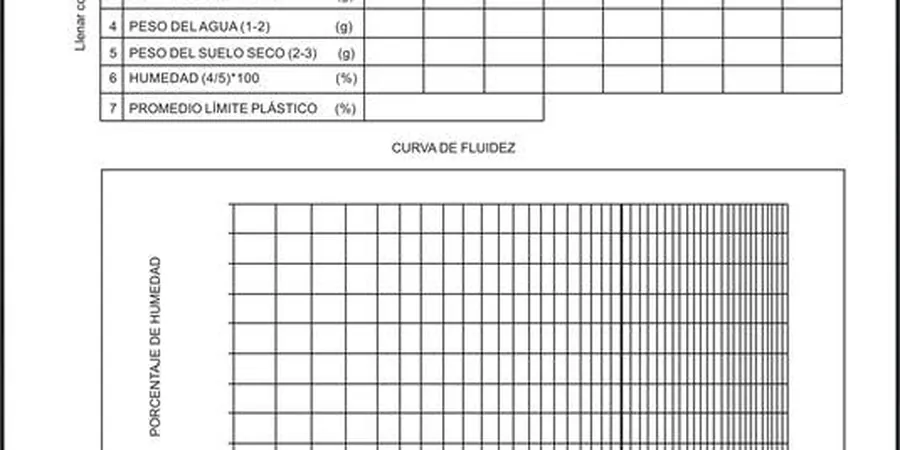
The coastal humidity and heavy winter rainfall in Metro Vancouver mean that site soils rarely dry out completely, so the plastic limit often governs field behavior in shallow excavations. Our lab runs the Casagrande cup method for liquid limit and the thread-rolling procedure for plastic limit on each sample, reporting the plasticity index and liquidity index. We also flag soils that plot above the A-line on the Casagrande plasticity chart, because those organic silts and clays — common in Richmond and Delta — are highly compressible and can trigger differential settlement in mat foundations. For roadworks, the shrinkage limit helps predict volume change during summer dry spells when the water table drops, while the plasticity index feeds directly into the AASHTO soil classification used by BC MoTI. Understanding these transitions between semisolid, plastic, and liquid states is the core of cohesive soil characterization.
Atterberg Limits Testing in Vancouver — Plasticity & Soil Classification
Technical reference — Vancouver

Local considerations

A mixed-use project in Mount Pleasant hit a pocket of plastic clay that wasn't caught during the preliminary site investigation. The soil had a PI of 28, and after a wet November the footing subgrade turned to paste. The contractor stopped work for three weeks waiting for dry weather, and the owner ate the delay cost. That clay had a liquid limit of 52 — meaning it only takes a modest increase in moisture to shift it from a stiff consistency to something that flows under a boot heel. In Vancouver’s rainy climate, ignoring the plasticity index of cohesive layers leaves your excavation open to base heave, your retaining walls to excessive lateral pressure, and your slab-on-grade to long-term cracking. For deep foundations, high-plasticity clays also develop negative skin friction that drags piles downward — a condition you cannot evaluate with a simple grain-size curve alone.

Need a geotechnical assessment?

Reply within 24h.

Email: contact@geotechnicalengineering.vip

Applicable standards

ASTM D4318-17e1 — Standard Test Methods for Liquid Limit, Plastic Limit, and Plasticity Index of Soils, ASTM D4943 — Standard Test Method for Shrinkage Factors of Cohesive Soils by the Wax Method, AASHTO T 89/T 90 — Standard Methods for Liquid Limit and Plastic Limit

Technical parameters

ParameterTypical value
Test StandardASTM D4318-17e1
Liquid Limit (LL)Casagrande cup method, reported to integer
Plastic Limit (PL)3 mm thread-rolling procedure
Plasticity Index (PI)PI = LL - PL
Liquidity Index (LI)LI = (w - PL) / PI, using field moisture w
Shrinkage Limit (SL)ASTM D4943 wax method available
Sample Requirements250 g passing No. 40 sieve, undisturbed preferred
Reporting FormatCasagrande plasticity chart (A-line classification)

Frequently asked questions

What does the plasticity index actually tell a structural engineer?

The PI gives you the water content range over which the soil behaves plastically. A high PI — above 25 — signals active clay minerals that swell with moisture and shrink when dry, which means the soil will move seasonally. In Vancouver’s wet climate, that translates to higher lateral earth pressure on basement walls and greater long-term settlement under sustained load. If the PI is below 10, the soil is likely a silt with little cohesion, and it can liquefy or erode quickly when saturated.

How long does the Atterberg limits test take in the lab?

A standard set of liquid limit and plastic limit determinations on a single sample takes one working day after sample preparation. If the soil is highly organic or contains fibrous peat — common in Richmond — oven-drying and sieving take longer, so we typically deliver results within two business days. Rush service is available for active construction sites.

How much does Atterberg limits testing cost in Vancouver?

For a standard liquid limit and plastic limit test per ASTM D4318, budget between CA$80 and CA$120 per sample, depending on the number of samples and whether you need the shrinkage limit as well. Package pricing applies when combined with grain-size analysis or consolidation testing on the same Shelby tube.

Can you test fat clays from the glacial till found on the North Shore?

Yes. The Capilano and Vashon glacial tills on the North Shore often contain lenses of fat clay with liquid limits above 60. We run the Casagrande cup procedure on the minus-425-micron fraction after careful wet preparation. These high-LL samples frequently require multiple trial runs to bracket the 25-blow closure point, but the data is essential for foundation design on sloping till sites where groundwater perches on the clay horizons.

Location and service area

We serve projects across Vancouver and its metropolitan area.

View larger map