Slopes and walls represent one of the most critical disciplines within geotechnical engineering in Vancouver, where steep terrain, complex glacial geology, and high seasonal precipitation create demanding conditions for earth retention and stability. This category encompasses the analysis, design, and remediation of natural and engineered slopes, as well as the structural systems required to retain soil and rock in both temporary and permanent configurations. From the North Shore mountainsides to the Fraser River escarpments, professionals in this field address landslide risk, excavation support, and long-term performance of retaining structures that directly affect public safety, infrastructure resilience, and property value.
Vancouver's unique geological setting is dominated by Pleistocene glacial deposits, including advance-phase lodgement till, glaciomarine silts, and outwash sands, often overlying Cretaceous bedrock at variable depths. These materials exhibit complex stress histories and sensitivity to moisture changes, making slope stability analysis essential for any development on inclined ground. The region's signature combination of steep slopes, high groundwater tables, and concentrated winter rainfall creates conditions where both shallow and deep-seated failures can occur with little warning. Understanding local stratigraphy, including the presence of sensitive clays in lowland areas and colluvial deposits on mountain slopes, is fundamental to accurate assessment and conservative design.
Regulatory frameworks in Vancouver are governed primarily by the British Columbia Building Code, which references national standards including the National Building Code of Canada and CSA geotechnical guidelines. The City of Vancouver's own bylaws impose additional requirements for hillside development, often mandating geotechnical assessments certified by a Professional Engineer registered with Engineers and Geoscientists BC. For retaining structures exceeding certain heights or surcharge conditions, retaining wall design must comply with CAN/CSA-S6 for highway structures or the Canadian Foundation Engineering Manual for building applications. The province's Professional Governance Act further requires qualified professionals to oversee geotechnical work, ensuring public accountability through documented risk assessments and construction monitoring.
Projects requiring this expertise span residential hillside construction, where cut-and-fill operations demand careful benching and drainage control, to major infrastructure corridors like the Sea-to-Sky Highway, where rockfall mitigation and anchored systems protect transportation networks. Deep excavations for urban towers in the downtown core routinely require active/passive anchor design to support shoring walls through glacial till, while waterfront developments along False Creek and the Fraser River must address lateral earth pressures combined with tidal fluctuations. Landslide stabilization in areas such as the British Properties or Burnaby Mountain involves comprehensive investigation, instrumentation, and often the integration of multiple retention strategies within a single site.
Vancouver slopes are influenced by steep topography, complex glacial geology including sensitive silts and till, high groundwater levels, and intense seasonal rainfall. Vegetation removal, improper drainage, and excavation without adequate support frequently trigger failures. The combination of these natural and anthropogenic factors requires thorough site-specific investigation to evaluate both shallow surficial instability and deeper rotational or translational failure mechanisms.
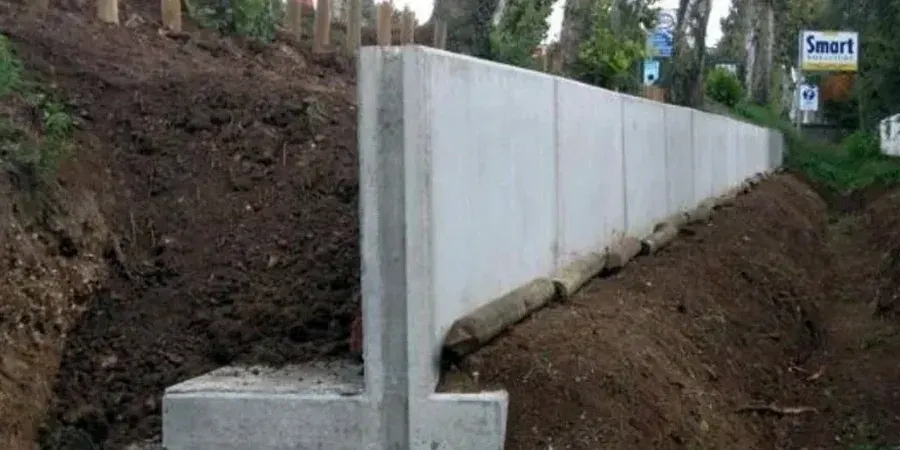
Retaining walls become necessary when space constraints, surcharge loads, or slope geometry prevent achieving stable configurations through grading alone. In Vancouver's hillside neighborhoods, walls are often mandated where lot boundaries, roadways, or structures limit the feasible slope angle. The choice between gravity walls, cantilever walls, or anchored systems depends on retained height, soil conditions, and long-term performance requirements under local climatic conditions.
Design is governed by the BC Building Code, the National Building Code of Canada, and CSA geotechnical standards, with additional requirements from municipal bylaws. The Professional Governance Act mandates oversight by registered Engineers and Geoscientists. For public infrastructure, CAN/CSA-S6 applies to highway retaining structures, while the Canadian Foundation Engineering Manual provides guidance for building-related earth retention systems.
Anchored systems transfer tensile loads into competent soil or rock behind potential failure surfaces, enabling steeper cuts and taller walls than passive systems alone. In Vancouver's dense glacial till, active anchors can prestress the ground to limit deformations during excavation, while passive anchors mobilize resistance gradually. Both approaches require careful corrosion protection and long-term monitoring, particularly in the region's wet coastal environment.
We serve projects across Vancouver and surrounding areas.