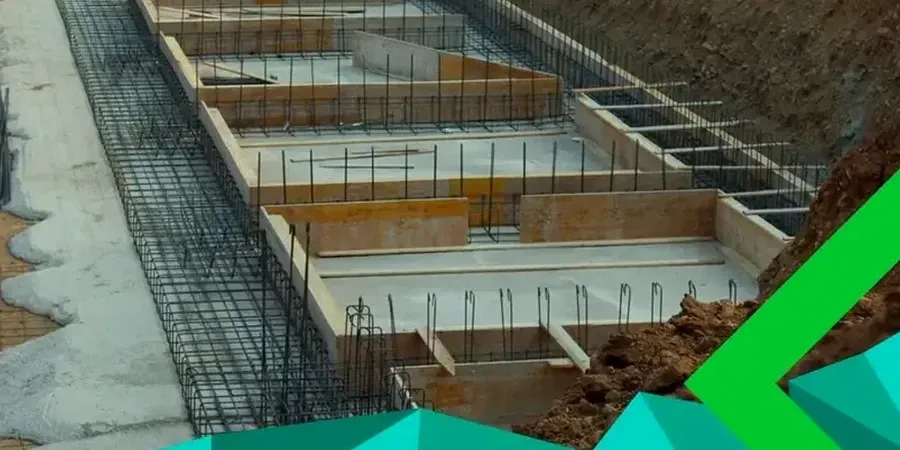
Foundations form the backbone of every construction project in Vancouver, transferring structural loads safely into the ground while accommodating the region's demanding geological conditions. In a city shaped by glacial activity, fluctuating water tables, and one of Canada's highest seismic risk profiles, foundation engineering goes far beyond simply digging into soil. It requires a precise understanding of subsurface behaviour, strict adherence to local codes, and careful coordination with municipal authorities. From single-family homes in Point Grey to high-rise towers in the downtown core, the performance of a foundation determines the long-term safety, serviceability, and value of the entire structure above.
Vancouver's geology presents a unique set of challenges that directly influence foundation selection and design. Much of the city sits on a complex layering of glacial till, marine silts, organic deposits, and fractured bedrock, with the depth to competent bearing strata varying dramatically within short distances. Areas near the Fraser River and False Creek often encounter thick sequences of compressible clays and liquefiable sands, while hillside neighbourhoods such as West Vancouver and Burnaby Mountain deal with steep slopes, colluvium, and shallow bedrock. Groundwater is typically high across the region, complicating excavations and requiring robust dewatering or cutoff measures. These conditions demand a thorough geotechnical investigation before any foundation type is proposed.
The regulatory framework governing foundation design in Vancouver is anchored in the British Columbia Building Code, which incorporates and adapts the National Building Code of Canada with specific provincial and municipal amendments. Seismic design requirements under Part 4 of the code are particularly stringent, reflecting Vancouver's location in a high-hazard zone. Foundation engineers must evaluate liquefaction potential, site class effects, and dynamic soil-structure interaction in accordance with CSA standards and local bulletins issued by the City of Vancouver. Deep foundation solutions such as pile foundation design are commonly mandated where near-surface soils lack adequate bearing capacity or where lateral loads from earthquakes and wind must be resisted at depth. All designs must be sealed by a professional engineer registered with Engineers and Geoscientists BC, and permit submissions require detailed geotechnical reports addressing slope stability, groundwater management, and excavation safety.
This category of services applies to a broad spectrum of project types across the Vancouver metropolitan area. Residential developments on challenging infill lots frequently require engineered shallow foundations with ground improvement or stepped footings to navigate sloping terrain. Mid-rise and high-rise buildings, particularly those with underground parkades, routinely call for advanced pile foundation design using driven steel piles, bored concrete piles, or helical piles to reach competent glacial till or bedrock. Infrastructure projects such as bridges, retaining walls, and seawalls along the Burrard Inlet and Fraser River corridors demand foundations capable of withstanding scour, tidal fluctuations, and long-term environmental exposure. Industrial facilities and port structures likewise depend on robust deep foundation systems to support heavy cranes, storage tanks, and container handling equipment on soft deltaic soils.
The decision hinges on soil bearing capacity, depth to competent strata, seismic site class, and groundwater conditions. Shallow foundations may suffice where dense glacial till is near the surface, but deep foundations such as piles become necessary when weak compressible clays, loose sands, or high liquefaction potential are encountered within the zone of influence.
Foundations must be designed to resist both vertical and lateral earthquake loads as prescribed in the BC Building Code. This includes evaluating liquefaction triggering, dynamic soil properties, and site-specific ground motion amplification. Deep foundation elements often require additional ductility detailing and connection design to accommodate cyclic loading without loss of capacity.
A comprehensive investigation usually includes test pits, boreholes with standard penetration testing, cone penetration tests, and laboratory analysis of soil samples. Groundwater monitoring and, for larger projects, geophysical surveys or pressuremeter testing may be needed to characterize the subsurface profile and inform foundation selection and parameters.
Yes, a building permit is mandatory, and the City of Vancouver reviews structural and geotechnical drawings for code compliance. Work involving deep excavations, dewatering, or proximity to neighbouring properties may also require a shoring permit, environmental permits for groundwater discharge, and right-of-way approvals if work extends into the street.
We serve projects across Vancouver and surrounding areas.