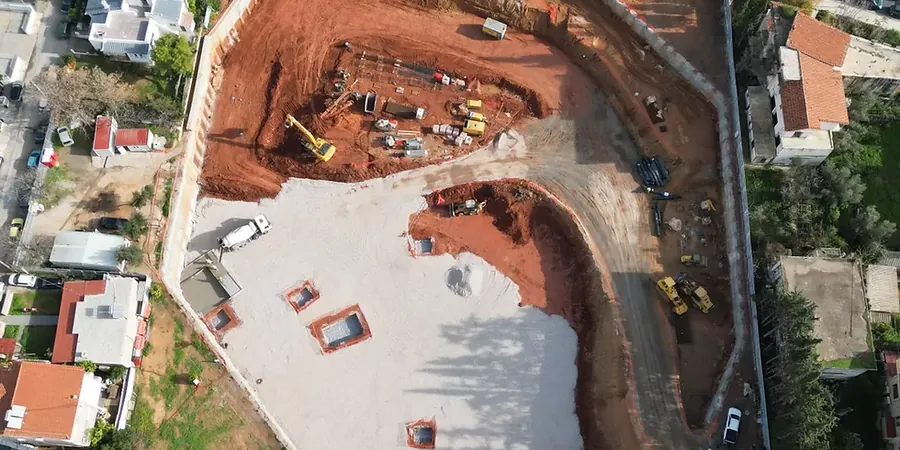
Excavation in Vancouver represents far more than the simple removal of soil; it is a sophisticated engineering discipline that underpins the city's entire urban development and infrastructure resilience. This category encompasses the full lifecycle of creating subterranean spaces, from the initial geotechnical analysis and structural design of support systems to the real-time monitoring that safeguards surrounding structures. In a densely populated metropolitan area constrained by mountains and water, the ability to safely and efficiently excavate deep shafts, basements, and tunnels is fundamental to economic growth and public safety.
Vancouver's complex geology makes specialized excavation expertise non-negotiable. The city is underlain by a challenging sequence of glacial and post-glacial deposits, including highly sensitive marine silts, compressible organic soils, and dense, erratic glacial till. Crucially, much of the urban core sits above a confined aquifer in the sand and gravel layers, creating high groundwater pressures that demand robust dewatering and impermeable retaining systems. The presence of liquefiable soils in seismic events, a constant consideration in this high-risk earthquake zone, adds another critical layer of complexity to any subsurface work, directly influencing the geotechnical design of deep excavations.
The regulatory framework governing excavation in British Columbia is stringent, prioritizing worker safety and public protection. WorkSafeBC's Occupational Health and Safety Regulation, specifically Part 20 on Excavations, is the primary standard, mandating professional geotechnical design for any excavation over 1.2 meters (4 feet) deep where personnel must enter. The City of Vancouver’s Building Bylaw enforces the British Columbia Building Code, which references the National Building Code of Canada and requires thorough geotechnical investigations and shoring designs sealed by a professional engineer. Adherence to these norms is not merely procedural; it is a legal and ethical obligation to manage risks like ground collapse and impact on adjacent heritage buildings.
This category of services is indispensable across a vast spectrum of projects. High-density residential and commercial towers require multi-level parkades, demanding some of the deepest shored cuts in the city, often employing tieback anchors drilled into the till. Major public transit expansions, like the Broadway Subway Project, rely heavily on geotechnical analysis for soft soil tunnels to navigate the water-bearing sediments beneath a bustling arterial road. Similarly, utility upgrades, pump stations, and bridge foundation construction all hinge on precise excavation methodologies. A critical, non-intrusive component binding these projects together is geotechnical excavation monitoring, which uses instruments like inclinometers and settlement points to verify design assumptions and trigger safety protocols if unexpected movement occurs.
The main risks stem from the city's glacial geology, including encountering highly sensitive marine silts prone to collapse, managing high groundwater pressures in confined aquifers, and mitigating soil liquefaction during an earthquake. Cohesionless sands running into an open cut and the potential settlement damage to adjacent, often century-old, masonry buildings due to dewatering or shoring deflection are also critical concerns requiring constant vigilance.
According to WorkSafeBC's Occupational Health and Safety Regulation, any excavation more than 1.2 meters (4 feet) deep into which a worker is required to enter must be designed by a professional geotechnical engineer. This design must include a detailed support system, such as shoring or sloping plans, to prevent collapse and ensure worker safety, in compliance with Part 20 of the regulation.
Groundwater management is site-specific but often employs a combination of methods. Impermeable temporary walls like secant pile shoring can cut off flow into the excavation. Where internal dewatering is needed, a well-point system or deep wells are installed, with extracted water treated and discharged to city sewers under a strict permit. The goal is to lower the water table without causing damaging settlement to neighboring properties.
Monitoring is legally mandated when an excavation's design or its proximity to sensitive infrastructure poses a risk. The City of Vancouver often requires a pre-construction condition survey and a monitoring plan as a condition of the building permit. This plan, sealed by an engineer, must detail instrumentation like inclinometers and settlement points to track ground movement and shoring performance, with predefined action levels to ensure immediate corrective measures if needed.
We serve projects across Vancouver and surrounding areas.