GEOTECHNICALENGINEERING
VANCOUVER
HomeRoadwayFlexible pavement design

Flexible Pavement Design for Vancouver’s Coastal Climate and Seismic Reality

Knowledgeable. Thorough. Resourceful.

LEARN MORE

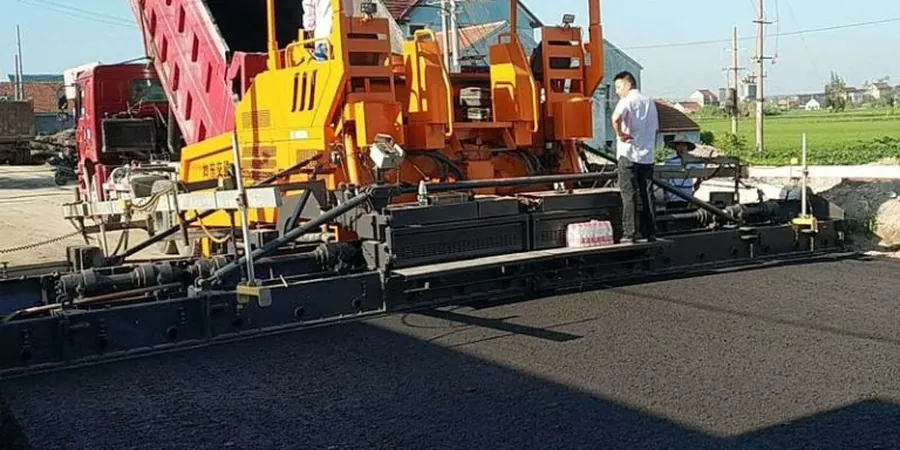
Vancouver’s climate doesn’t just test a road—it punishes it. With over 1,400 mm of rain annually and winter freeze-thaw cycles that sneak into the asphalt matrix, a standard flexible pavement design simply won’t hold up here without real geotechnical adaptation. The city’s position on the Fraser River delta means subgrades often sit on compressible silts and organic layers, so deflection and rutting become budget-killers if ignored. Our team combines laboratory characterization with field verification to build pavement sections that work with the drainage patterns of Metro Vancouver, not against them. When the subgrade gets tricky—say near Richmond’s soft clays—we often pair the pavement analysis with a CBR road investigation to anchor the structural number in site-specific strength data, and sometimes pull in in-situ permeability tests to confirm that the base course won’t saturate during November storms.

A flexible pavement in Vancouver lives or dies by the drainage detail—get the base course permeability wrong and you’re repaving after the first heavy winter.
Our service areas

Methodology and scope

ASTM and AASHTO standards form the backbone, but in Vancouver you learn quickly that the BC Supplement to TAC’s Pavement Design and Asset Management Guide carries equal weight. The design process here isn’t a copy-paste from a manual—it’s a conversation between traffic loading forecasts, subgrade resilient modulus, and the reality of groundwater perched in glacial till. We run gyratory compaction and indirect tensile strength on lab-prepared mixes to validate that the asphalt binder grade matches the Coastal climate zone, especially where truck traffic pounds the port connector routes. Layered elastic analysis lets us model stress distribution through the asphalt, base, and subbase, so we can spot fatigue cracking potential before the paver even rolls. The result is a pavement structure that balances upfront material cost against long-term performance—exactly what contractors and municipal asset managers in the Lower Mainland need when facing tight tender deadlines and tighter maintenance budgets.
Flexible Pavement Design for Vancouver’s Coastal Climate and Seismic Reality
Technical reference — Vancouver

Local considerations

The Fraser River delta doesn’t offer much mercy to flexible pavements. Much of Vancouver sits on sequences of soft marine clays and silty deposits that can lose stiffness fast when moisture content climbs above optimum—and in a city where rain falls 165 days a year, that’s a constant threat. Seismic shaking from a Cascadia subduction event adds another layer: cyclic loading can liquefy the underlying sands, causing differential settlement that tears apart even well-designed asphalt layers. Without a site-specific subgrade evaluation, you’re gambling with deformation that shows up as alligator cracking within three to five years. The worst-case scenario isn’t just extra maintenance—it’s a full reconstruction order from the city engineer because the pavement failed to meet the NBCC serviceability requirements for essential access routes.

Need a geotechnical assessment?

Reply within 24h.

Email: contact@geotechnicalengineering.vip

Applicable standards

ASTM D1557 (modified Proctor compaction), ASTM D2950 / D6938 (nuclear density in-place), TAC Pavement Design and Asset Management Guide, BC Supplement, AASHTO 1993 Guide for Design of Pavement Structures, NBCC 2020 Part 4, seismic provisions

Technical parameters

ParameterTypical value
Design traffic (ESALs, 20-year)0.3–30 million, per TAC / BC MoTI
Asphalt binder performance gradePG 58-28 to PG 64-34, adjusted for coastal humidity
Subgrade resilient modulus (Mr)20–80 MPa typical for Fraser delta silts
Layer thickness verificationNuclear density gauge + core extraction per ASTM D2950
Drainage coefficient (mi)0.6–1.0, based on in-situ permeability and rainfall exposure
Fatigue cracking modelAsphalt Institute transfer function, calibrated to local mixes
Compaction specification92–96% of modified Proctor, per ASTM D1557

Frequently asked questions

How much does a flexible pavement design package cost in Vancouver?

For a typical arterial road or commercial lot in Metro Vancouver, the structural design and mix validation package generally runs between CA$2,030 and CA$7,850, depending on traffic data complexity, number of boring locations, and whether additional laboratory performance tests are required. We scope the work to match the tender requirements so you don’t pay for analysis your project doesn’t need.

Which asphalt binder grade works best for Vancouver’s climate?

We typically specify PG 58-28 or PG 64-34 for the Lower Mainland, balancing the mild Pacific winters against the occasional summer heat wave. The final selection depends on the pavement layer (surface vs. base course) and the expected truck traffic, validated through rheological testing of local binder sources.

Why does Vancouver need different pavement design than Calgary or Toronto?

Vancouver’s combination of high rainfall, frequent freeze-thaw cycles, and soft deltaic soils creates a fatigue environment that interior cities don’t face. Calgary deals with frost depth, Toronto with clay heave—here we’re fighting moisture sensitivity and seismic settlement simultaneously, which demands a drainage-first approach and conservative subgrade stabilization.

Can you design a flexible pavement section that resists seismic damage?

Yes—we incorporate the NBCC seismic provisions and check the subgrade for liquefaction potential under the design earthquake. Where the risk is significant, we recommend granular subbase reinforcement or geogrid interlayers that maintain pavement integrity even if the underlying ground undergoes moderate differential movement.

Location and service area

We serve projects across Vancouver and its metropolitan area.

View larger map