GEOTECHNICALENGINEERING
VANCOUVER
HomeUnderground ExcavationsGeotechnical analysis for soft soil tunnels

Geotechnical Analysis for Soft Ground Tunnels in Vancouver

Knowledgeable. Thorough. Resourceful.

LEARN MORE

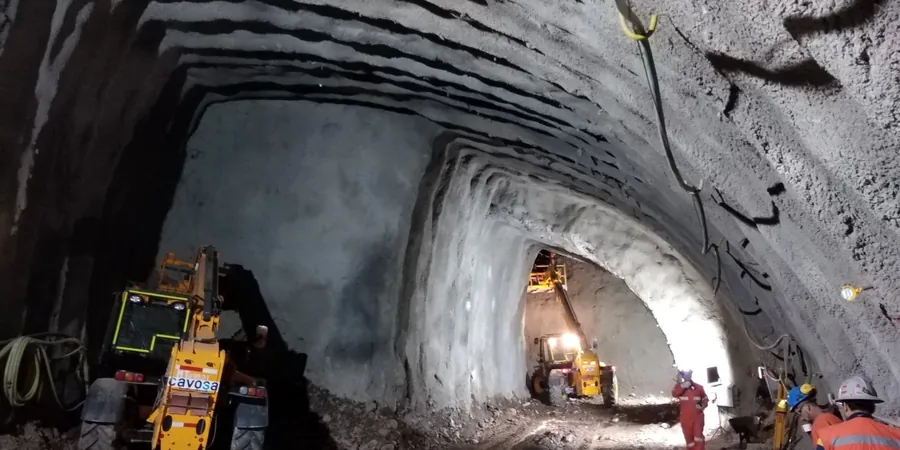
Vancouver sits on a complex foundation of glacial till, marine silts, and soft deltaic clays that make underground construction particularly demanding. The False Creek flats and much of the downtown core rest on sediments that can exceed 30 meters in depth, with groundwater tables often less than two meters below the surface. Tunneling through these materials requires more than standard investigation. Our laboratory runs constant triaxial and consolidation tests on undisturbed samples to provide the parameters needed for settlement prediction and face stability analysis. For open-face TBMs in these conditions, we combine advanced lab testing with field CPT data to calibrate the soil behavior model before excavation begins. The Fraser River delta adds another layer of complexity, with interbedded sand lenses that can destabilize a tunnel heading without warning.

Soft ground tunneling in Vancouver is a settlement control problem first and a structural design problem second.
Our service areas

Methodology and scope

NBCC 2020 and CSA A23.3 set the structural framework, but soft ground tunneling in Vancouver demands site-specific characterization that goes well beyond code minimums. We focus on undrained shear strength profiles, consolidation coefficients, and sensitivity ratios that dictate how the soil responds to stress relief during excavation. Silty clays in the region often exhibit strain-softening behavior, meaning strength drops after peak failure. Our lab quantifies this through CU and UU triaxial programs per ASTM D4767 and D2850. For projects near existing infrastructure, we run incremental loading oedometer tests to generate the compression and recompression indices used in numerical models. These parameters feed directly into PLAXIS and FLAC simulations that predict ground loss and surface settlement troughs. When the alignment crosses through glacial till transitions, we supplement with grain size analysis to identify the cobble content that can slow TBM advance rates and increase tool wear.
Geotechnical Analysis for Soft Ground Tunnels in Vancouver
Technical reference — Vancouver

Local considerations

Vancouver's rapid expansion from a mill town into a dense metropolitan center pushed infrastructure into ground that builders a century ago would have avoided entirely. The Canada Line cut-and-cover sections through Cambie Street and the Evergreen Line bored tunnels through glacial sediments both encountered conditions where even small face losses translated into surface settlements exceeding 30 mm. The consequence is not just cracked pavement. Differential settlement can damage adjacent building foundations, rupture utility lines, and trigger legal claims from property owners along the alignment. Pre-construction condition surveys paired with conservative settlement predictions based on properly calibrated soil parameters reduce this exposure. Ignoring the strain-softening behavior of these sensitive clays during the design phase leads to TBM face collapses or sinkholes that shut down projects for months. The cost of additional lab testing is negligible compared to a single day of TBM downtime.

Need a geotechnical assessment?

Reply within 24h.

Email: contact@geotechnicalengineering.vip

Applicable standards

ASTM D4767-23 (CU triaxial with pore pressure measurement), ASTM D2435/D2435M-23 (one-dimensional consolidation), CSA A23.3-19 (concrete structures in contact with ground)

Technical parameters

ParameterTypical value
Undrained shear strength (Su)20–80 kPa typical for marine clays
Sensitivity (St)4–12 (moderate to highly sensitive)
Compression index (Cc)0.3–0.8 for soft silty clays
Coefficient of consolidation (cv)1–5 m²/yr vertical
Permeability (k)1×10⁻⁹ to 1×10⁻⁷ m/s
Plasticity index (PI)15–45% for glaciolacustrine deposits
Groundwater depth0.5–3.0 m below grade in low-lying areas

Frequently asked questions

What is the typical cost range for a soft ground tunnel geotechnical lab program in Vancouver?

A comprehensive lab testing program for soft ground tunnel design generally ranges from CA$5,290 to CA$21,970 depending on the number of boreholes, sample depth, and the specific suite of triaxial and consolidation tests required. Projects spanning multiple geologic units or long alignments fall at the upper end of this range.

How do you determine the undrained shear strength profile for tunnel design?

We run consolidated-undrained (CU) triaxial tests with pore pressure measurement on undisturbed Shelby tube samples. For very soft clays where sample disturbance is a concern, we complement lab data with field vane shear tests and CPT correlations to validate the strength profile used in face stability calculations.

What settlement criteria do you use for tunneling under existing buildings?

Settlement criteria are project-specific and negotiated with the owner and municipality, but typical thresholds in Vancouver are 25 mm maximum settlement and 1:500 angular distortion for masonry buildings. Our consolidation testing provides the compression index and recompression index needed to calculate these settlements accurately.

How long does a complete lab testing program take?

Consolidation tests require 7 to 10 days per loading increment per ASTM D2435. Triaxial programs with multiple confining pressures typically take 3 to 4 weeks from sample receipt to final report. We coordinate with the drilling schedule so that testing is underway while the field investigation is still in progress.

What soil parameters are most critical for TBM selection?

Grain size distribution, plasticity index, and undrained shear strength are the primary parameters that dictate TBM cutterhead design and face support pressure requirements. Permeability and consolidation coefficient determine whether a slurry or EPB machine is more suitable for the ground conditions.

Location and service area

We serve projects across Vancouver and its metropolitan area.

View larger map