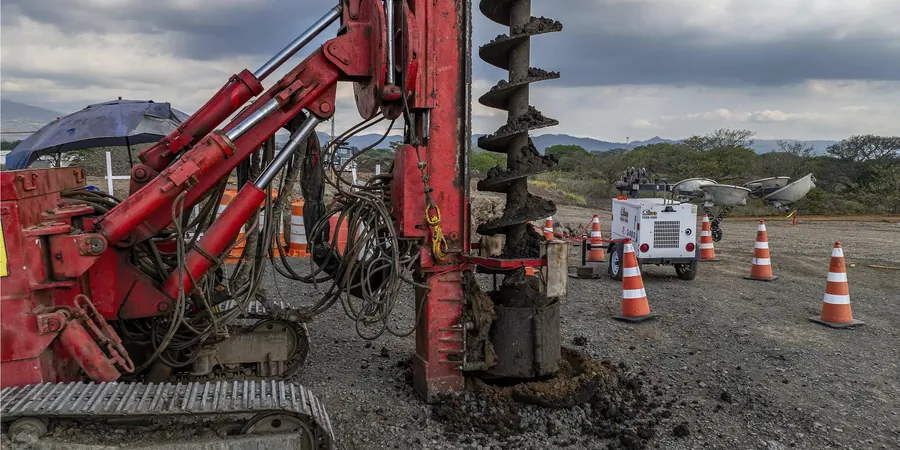
Vancouver’s growth from a mill town on Burrard Inlet to a dense coastal metropolis placed heavy infrastructure directly atop the Fraser River delta. Much of the city sits on compressible silts and clays that reach depths exceeding 200 meters in places like Richmond. Early builders accepted large settlements; modern engineers demand solutions that limit total and differential movement to millimeters. Stone column design emerged as the primary Improvement method across the Lower Mainland because it tackles both bearing capacity and drainage in one operation. The approach works with the native soil rather than replacing it—a critical advantage when excavation triggers lateral displacement in sensitive marine clays. For projects where column loads exceed the capacity of improved ground alone, the design often integrates a load-transfer platform evaluated through footings analysis to distribute stress efficiently. Recent projects near False Creek and the Oakridge redevelopment have pushed installation depths past 25 meters, requiring careful vibro-replacement parameter control to maintain column continuity through liquefiable layers identified by the liquefaction assessment mandated in the 2015 NBCC seismic provisions.
A properly designed stone column grid reduces post-construction settlement in Vancouver’s deltaic clays by 50 to 70 percent compared to untreated ground.