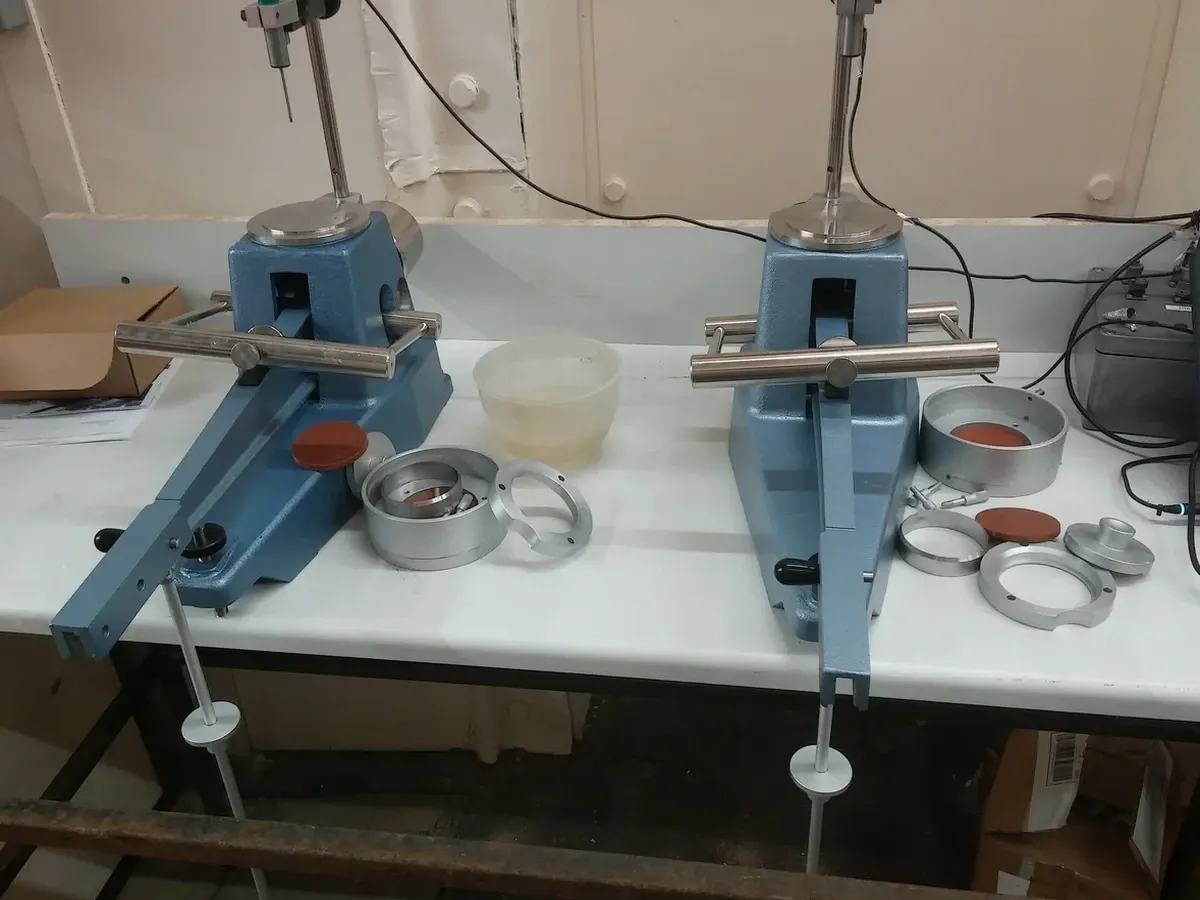
Geotechnical laboratory testing forms the backbone of any robust subsurface investigation in Vancouver, transforming field samples into quantifiable engineering parameters. This category encompasses the systematic physical, mechanical, and chemical analysis of soil and rock specimens recovered from boreholes, test pits, and sampling campaigns. In a region defined by complex glacial geology, high seismicity, and steep terrain, laboratory data is not merely supplementary—it is the definitive basis for foundation design, slope stability assessments, and seismic hazard evaluations. Without precise laboratory-derived values, engineers would be forced to rely on conservative empirical correlations that often prove uneconomical or, conversely, insufficiently safe for Vancouver's challenging ground conditions.
Vancouver's unique geological setting demands rigorous laboratory characterization due to the prevalence of advance glaciation deposits. The city is underlain by a stratigraphic sequence including Vashon till, glaciomarine stony clays, and post-glacial sediments like the sensitive Salish silts and soft organic soils of the Fraser River delta. These materials exhibit behaviours—such as strain-softening in quick clays or liquefaction susceptibility in loose deltaic sands—that can only be reliably predicted through specialized laboratory testing. For instance, the fine-grained marine clays require precise classification through tests like Atterberg limits to establish their plasticity characteristics and potential for volume change, while the granular advance outwash deposits necessitate a detailed grain size analysis (sieve + hydrometer) to construct accurate gradation curves for drainage and filtration design.
Compliance with national standards is mandatory for all laboratory testing conducted for Vancouver projects. The Canadian Foundation Engineering Manual (CFEM) provides overarching guidance, but the specific procedures adhere strictly to ASTM International and CSA (Canadian Standards Association) protocols. Key standards include ASTM D422 for particle-size analysis, ASTM D4318 for Atterberg limits, and CSA A23.2 series for concrete aggregate testing. Furthermore, for seismic design in accordance with the National Building Code of Canada (NBCC) and the BC Building Code, site-specific shear wave velocity measurements and cyclic laboratory tests (such as cyclic direct simple shear) are often mandated for Site Class determination in this high seismic hazard Zone 4 region.
The scope of projects requiring comprehensive laboratory programs in Vancouver is broad. High-rise developments in the downtown core and the Broadway Corridor rely on consolidation and triaxial shear tests to design deep foundations socketed into glacial till. Infrastructure projects, including the Broadway Subway extension and TransLink bridge upgrades, demand extensive compaction and durability testing of aggregate base courses. Residential developments on the North Shore slopes require direct shear testing of colluvial soils for slope stability analysis, while industrial facilities along the Fraser River mandate consolidation tests to estimate long-term settlement in compressible alluvial clays. Each project benefits from a tailored laboratory suite that directly informs the geotechnical design parameters.
Standard classification tests like moisture content, grain size analysis, and Atterberg limits typically yield results within 3 to 5 business days. However, advanced mechanical tests such as consolidation or triaxial shear can require 1 to 3 weeks due to lengthy saturation and shearing stages, especially for fine-grained soils common in Vancouver's glaciomarine deposits.
Laboratory testing must conform to ASTM International standards (e.g., ASTM D422, D4318) and relevant CSA Group standards. Compliance with the BC Building Code and the National Building Code of Canada is mandatory, particularly for seismic site classification which requires specific testing protocols to determine shear wave velocity.
Vancouver's glacial and post-glacial soils, including sensitive marine clays and liquefiable deltaic sands, dictate specialized testing. Tests for strain-softening behavior, cyclic resistance, and consolidation are critical to address slope instability in Salish silts and seismic settlement in Fraser River delta deposits, beyond basic classification.
High-quality undisturbed samples, typically obtained using thin-walled Shelby tubes for cohesive soils, are essential for strength and consolidation testing. Disturbed samples are acceptable for classification tests like grain size analysis. Strict adherence to ASTM D4220/D4220M storage and transport practices is required to preserve sample integrity.
We serve projects across Vancouver and surrounding areas.