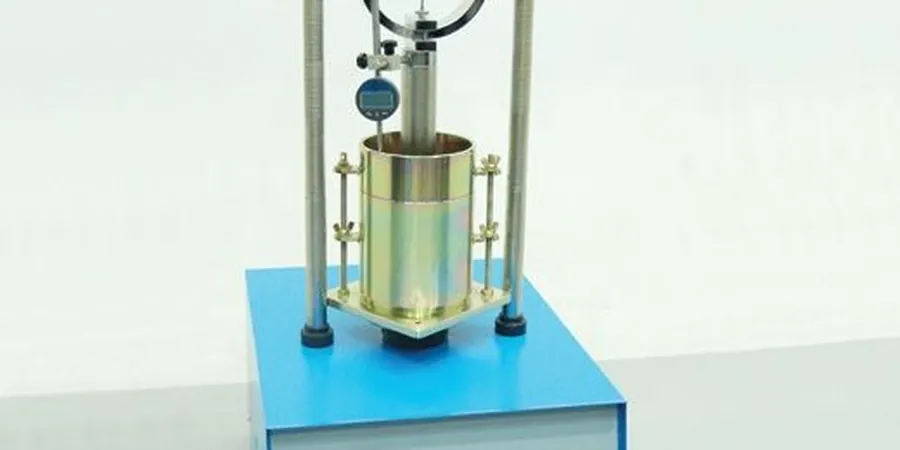
Vancouver’s annual rainfall exceeds 1,150 mm, and that persistent moisture fundamentally changes how pavement subgrades perform over time. A simple field density check cannot predict how a silty or clayey subgrade will weaken after months of saturation, which is why the soaked Laboratory CBR test has become standard practice for road and parking lot design across the Lower Mainland. We run the procedure in our ISO 17025-accredited lab following ASTM D1883, compacting remolded specimens at target moisture and density, then submerging them for 96 hours before penetration. For granular base course materials sourced from Fraser River pits, the unsoaked CBR often tells a different story, and we test both conditions when the pavement structure includes open-graded drainage layers. Municipalities from Surrey to North Vancouver routinely request CBR values alongside grain-size distributions to validate the structural number assumptions in their pavement designs.
A soaked CBR value below 3 percent on Vancouver silt means the subgrade alone cannot support construction traffic without a stabilization strategy.