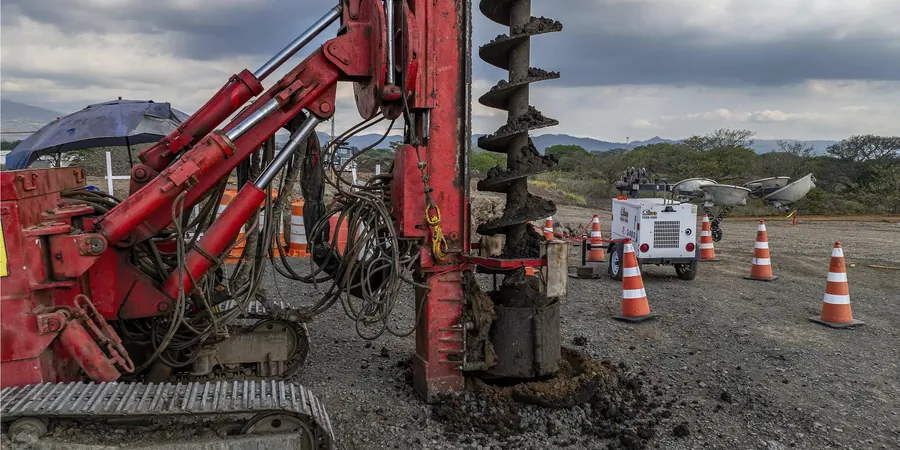
Ground improvement in Vancouver is not merely a construction preference—it is a fundamental necessity driven by the region's challenging subsurface conditions. Encompassing a range of specialized geotechnical techniques designed to enhance the engineering properties of soil, this category addresses critical issues such as low bearing capacity, excessive settlement, and liquefaction potential. In a metropolitan area where prime land is scarce and development pressures are intense, the ability to safely build on weak, compressible, or otherwise problematic soils directly impacts project viability, cost, and long-term resilience. From the heavy industrial terminals of the Fraser River to the dense residential towers reshaping the skyline, ground improvement provides the essential foundation for sustainable growth.
The geological legacy of Vancouver presents a complex tapestry of deltaic deposits, glacial tills, and man-made fills. Much of the city's most developable land, including large portions of Richmond, Delta, and South Vancouver, lies within the Fraser River delta, where thick sequences of soft, normally consolidated silts and clays are interspersed with loose, saturated sand layers. These conditions are highly susceptible to significant seismic shaking, which can trigger liquefaction—a phenomenon where soil temporarily loses strength and behaves like a liquid. Historical and pre-historical evidence of massive subduction zone earthquakes from the Cascadia fault underscores the catastrophic risk. Consequently, ground improvement is not just about preventing settlement; it is a primary strategy for seismic risk mitigation, transforming potentially hazardous ground into a stable construction platform.
The practice of ground improvement in British Columbia is governed by a robust framework of national and local standards, with the British Columbia Building Code (BCBC) serving as the primary regulatory document. The BCBC extensively references the National Building Code of Canada (NBC) and, crucially for geotechnical design, the CSA A23.3 standard for concrete design and the Canadian Foundation Engineering Manual (CFEM) for accepted principles of analysis. For seismic design, the rigorous site-specific seismic hazard assessments required in high-risk zones like Metro Vancouver are dictated by the NBC, which mandates thorough subsurface investigations. Engineers must demonstrate that improved ground meets stringent performance criteria for both static and dynamic loading, with particular attention to post-liquefaction volumetric strain and lateral spreading displacement. Professional practice is overseen by Engineers and Geoscientists British Columbia (EGBC), which requires practitioners to adhere to high standards of quality assurance during the design and execution of these complex works.
The types of projects that demand ground improvement are as diverse as the region's infrastructure needs. Large-scale port expansions and industrial facilities along the Fraser River frequently require methods like vibrocompaction design to densify loose hydraulic fills and natural sands, preventing differential settlement under massive crane loads and stacked containers. For multi-story residential and commercial buildings founded on deeper, cohesive soft soils, stone column design offers a dual solution, providing both vertical drainage to accelerate consolidation settlement and reinforcement to increase bearing capacity and shear strength. Critical transportation corridors, bridge approaches, and liquid storage tanks in the floodplain also rely heavily on these techniques to meet strict long-term performance and safety standards, ensuring that vital arteries remain operational after a major seismic event.
The primary purpose is to mitigate the risks posed by the region's weak and seismically sensitive soils. Much of Vancouver is underlain by soft deltaic silts and loose sands prone to liquefaction and excessive settlement. Ground improvement techniques enhance these soils' strength, stiffness, and drainage characteristics, ensuring stable foundations for infrastructure and providing critical seismic resilience against major earthquakes.
Ground improvement design is governed by the British Columbia Building Code (BCBC), which adopts the National Building Code of Canada (NBC) for structural and seismic design. Geotechnical analysis follows the principles of the Canadian Foundation Engineering Manual (CFEM). For seismic performance, site-specific hazard assessments per the NBC are mandatory, and all professional engineering work must comply with the quality standards set by Engineers and Geoscientists BC (EGBC).
The most problematic conditions are the thick, compressible silts and clays of the Fraser River delta, which cause long-term settlement, and loose, saturated sand deposits that are highly susceptible to earthquake-induced liquefaction. Additionally, uncontrolled man-made fills and soft organic soils in former bog or marshland areas frequently require treatment to become suitable for supporting structures.
It directly reduces the risk of liquefaction and lateral spreading, which are the leading causes of foundation failure during earthquakes in Vancouver. Techniques like vibrocompaction densify loose sands, preventing them from losing strength, while stone columns provide drainage and reinforcement. This engineered mitigation ensures that buildings and infrastructure can withstand a major seismic event with minimal damage, protecting lives and investments.
We serve projects across Vancouver and surrounding areas.