Roadway engineering in Vancouver represents a critical intersection of geotechnical science and urban infrastructure planning, encompassing the comprehensive design and evaluation of pavement structures that must withstand the region's unique environmental demands. This category covers the full spectrum of road construction methodologies, from the analysis of subgrade soil conditions to the selection of appropriate pavement types that will endure decades of service under challenging climatic conditions. In a city bounded by mountains and the Pacific Ocean, where transportation corridors are vital lifelines for economic activity and daily commutes, the integrity of roadway systems directly impacts public safety, commercial efficiency, and municipal maintenance budgets. The discipline integrates soil mechanics, material science, and hydrological considerations to create durable driving surfaces that resist the destructive forces of heavy rainfall, freeze-thaw cycles, and seismic activity characteristic of the Lower Mainland.
Vancouver's geological setting presents a complex tapestry of glacial deposits, marine clays, and alluvial soils that profoundly influence roadway performance and design requirements. Much of the urban core rests on the Fraser River delta, where deep deposits of compressible silts and clays create significant challenges for long-term pavement stability, often necessitating specialized ground improvement techniques before any surface construction can begin. Glacial till prevalent across the North Shore and higher elevations provides more competent bearing conditions but introduces variability in drainage characteristics and stiffness that must be carefully mapped through comprehensive geotechnical investigations. The region's high water table, combined with an average annual precipitation exceeding 1,100 millimeters, demands robust subsurface drainage systems and moisture-resistant pavement designs to prevent the premature failure mechanisms of pumping, rutting, and frost heave that plague inadequately engineered roads.
All roadway design and construction within Vancouver must conform to the standards established by the Ministry of Transportation and Infrastructure of British Columbia, specifically the BC Supplement to the Transportation Association of Canada's Geometric Design Guide. The flexible pavement design methodology follows the AASHTO 1993 Guide for Design of Pavement Structures, adapted through the BC Ministry's Pavement Design Manual to account for local materials and climatic conditions. For concrete alternatives, rigid pavement design is governed by the American Concrete Pavement Association's StreetPave software with regional calibration factors that address Vancouver's specific freeze-thaw severity. Municipal projects within the City of Vancouver additionally comply with the MMCD Platinum Edition and the city's own Design Standards Manual, which specify minimum structural numbers based on traffic classifications and mandate environmental performance criteria for stormwater management adjacent to roadway corridors.
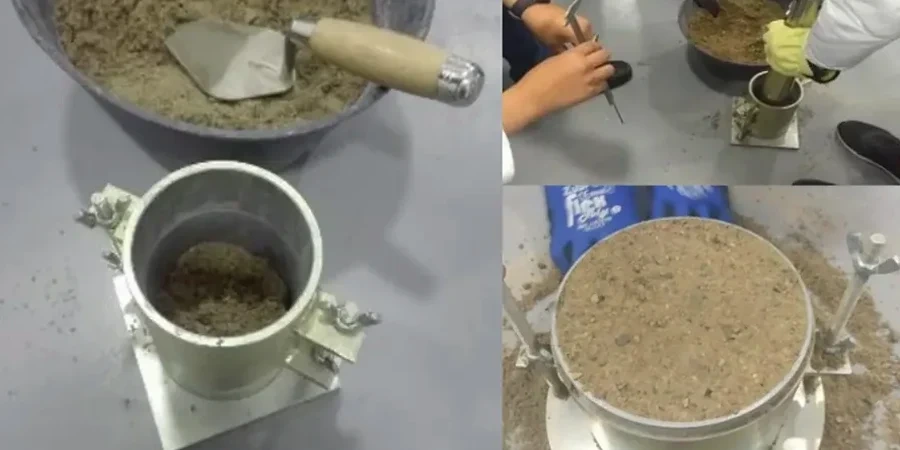
The types of projects requiring comprehensive roadway geotechnical services span from arterial road widening and intersection improvements to the construction of entirely new residential subdivisions and industrial access routes. Urban densification initiatives along the Broadway Corridor and the Cambie Street area demand sophisticated pavement rehabilitation strategies that minimize disruption to existing traffic patterns while upgrading structural capacity for increased bus rapid transit and commercial vehicle loading. Suburban developments in areas like Surrey and Langley, where rapid population growth is pushing infrastructure into previously undeveloped lands, require thorough CBR study for road design to characterize subgrade strength and determine appropriate pavement thicknesses that will prevent premature deformation under increasing traffic volumes. Industrial projects, including port access roads and container terminal expansions in Delta and Richmond, present extreme loading conditions where the interaction between heavy vehicle wheel loads and weak subgrade soils demands innovative reinforcement solutions.
Vancouver roadways primarily utilize two pavement types: flexible asphalt concrete pavements and rigid Portland cement concrete pavements. Flexible pavements are more common due to lower initial costs and easier maintenance, consisting of multiple granular layers topped with asphalt. Rigid pavements, though more expensive initially, offer superior durability under heavy traffic and are often specified for bus lanes, industrial areas, and major intersections where long-term performance justifies the investment.
Vancouver's wet coastal climate, with frequent freeze-thaw cycles during winter months, significantly impacts roadway durability. Moisture infiltration into pavement layers can lead to subgrade softening, loss of structural support, and frost heave. Designers must incorporate effective subsurface drainage, specify freeze-resistant aggregates, and calculate pavement thicknesses that account for reduced soil strength during saturated conditions to prevent premature cracking and rutting.
Subgrade investigation is fundamental to roadway engineering, as the underlying soil provides the foundation for all pavement layers. Geotechnical studies, including borehole drilling and laboratory testing, determine soil classification, bearing capacity, moisture sensitivity, and compressibility. This data directly informs pavement thickness design, the need for soil stabilization or replacement, and drainage requirements, ensuring the road structure can support design traffic loads throughout its intended service life.
Roadway design in BC is governed by the Ministry of Transportation and Infrastructure's BC Supplement to TAC's Geometric Design Guide, along with the Pavement Design Manual based on AASHTO 1993 methodology. Municipal projects follow the MMCD Platinum Edition and local design standards. Environmental regulations under the BC Water Sustainability Act also impose stormwater management requirements that influence roadway drainage design and permeable pavement considerations.
We serve projects across Vancouver and surrounding areas.