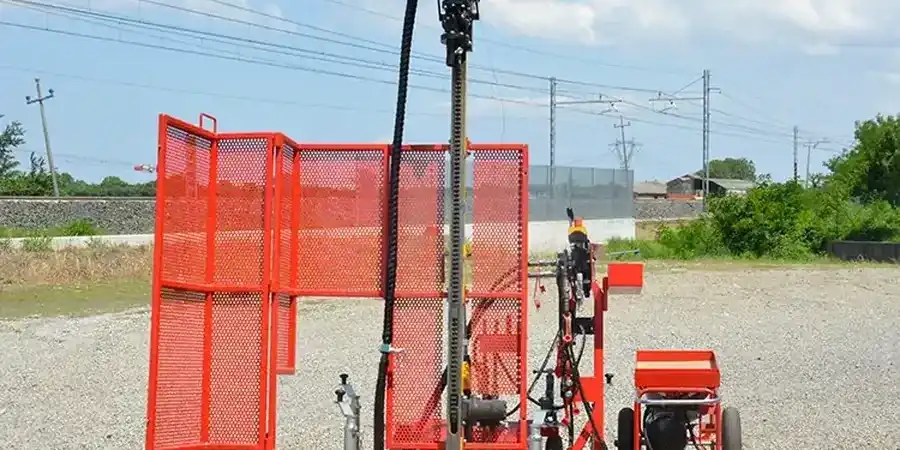
A mid-rise mixed-use project on Cambie Street hit refusal at 18 meters during piling — not because of bedrock, but dense Vashon till the driller hadn't anticipated. We see it across Vancouver: the city's glacial stratigraphy flips from soft Fraser River silts to compact lodgment till within a single block, and guessing N-values from SPT blow counts without local context leads to overdesigned footings or, worse, missed liquefaction triggers. The Standard Penetration Test remains the most practical way to sample and get that N-value profile, especially when the water table sits just 2–3 meters below grade as it does across much of the downtown peninsula. We run SPTs per ASTM D1586 with calibrated automatic trip hammers and log every 1.5-meter interval so the structural engineer gets a defensible bearing capacity estimate — not a textbook number that ignores the False Creek infill or the organic lenses mapped in the UBC Endowment Lands. When the stratigraphy gets tricky, we often pair SPT data with a CPT profile to resolve thin silt seams the spoon can smear, or verify the transition from compressible clays to dense till where N-values alone are ambiguous.
An SPT N-value without the soil description and recovery ratio is just a number — in Vancouver's layered glacial profile, the driller's log is the real engineering deliverable.